

Walk into a lumberyard for the first time and the choices can feel endless. Oak or maple? Pine or cedar? What makes walnut different from purpleheart—and why can two boards of the same species look so different?
Learning the basics of wood selection will make every project easier. The right wood affects how smoothly a board cuts, how well it holds a screw, how it accepts stain, how long the finished piece lasts, and—of course—how it looks.
This beginner’s guide explains the three labels you will encounter most often: hardwood, softwood, and exotic wood. It also gives you a practical method for identifying an unfamiliar piece of lumber.
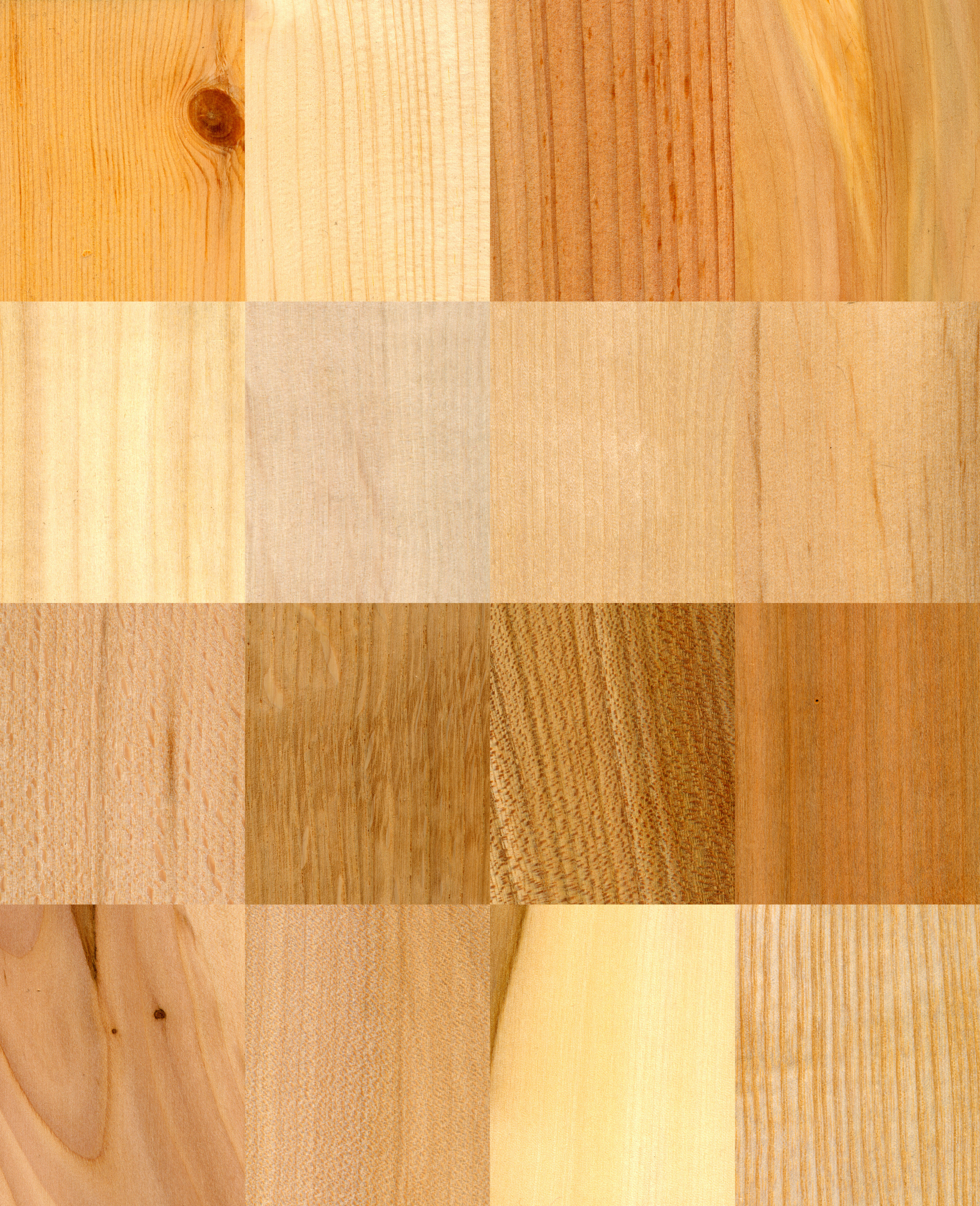
Wood can vary dramatically in color, grain, and texture. These samples include four conifers and twelve broadleaf species. Photo: Anonimski, Wikimedia Commons, CC0.

First, a Common Misunderstanding
The words hardwood and softwood do not reliably describe how hard a board feels. They describe the type of tree the wood came from.
-
Hardwoods come from angiosperms—usually broadleaf trees that produce flowers, fruits, or nuts.
-
Softwoods come from gymnosperms—usually cone-bearing trees with needles or scale-like leaves.
-
Exotic wood is not a botanical category. In woodworking, it generally means a species imported from another region, often from tropical areas.
Most hardwoods are denser than most softwoods, but there are exceptions. Basswood and balsa are hardwoods even though they are light and easy to cut. Yew is a softwood even though it can be relatively hard. When strength or dent resistance matters, look at the characteristics of the individual species rather than relying on its category alone.
| Category | Comes from | Typical traits | Common examples | Often used for |
|---|---|---|---|---|
| Hardwood | Broadleaf, flowering trees | Often dense, durable, and visually distinctive | Oak, maple, cherry, walnut, poplar | Furniture, cabinetry, flooring, cutting boards |
| Softwood | Cone-bearing trees | Often lighter, straighter-grained, and easier to work | Pine, cedar, fir, spruce | Framing, shelving, outdoor projects, painted furniture |
| Exotic wood | Imported species; may be hardwood or softwood | Often unusual in color, grain, density, or natural oils | Purpleheart, padauk, zebrawood, teak, ebony | Accents, fine furniture, turning, instruments, decorative work |
Hardwood: Durable, Varied, and Furniture-Friendly
Hardwoods are a favorite for furniture because they often combine strength with attractive grain. They generally resist dents better than softwoods and can hold up well in tabletops, cabinets, floors, chairs, and other pieces that receive regular use.
Hardwood is not automatically difficult to work, however. Poplar machines easily and is a good choice for painted projects. Walnut cuts and carves beautifully, while hard maple is more resistant and can be demanding on dull tools.
Common hardwoods for beginners
Oak has prominent grain and visible pores. It is strong, widely available, and useful for furniture, cabinets, flooring, and trim. Red oak tends to have a warm pink or reddish cast, while white oak is usually more tan or olive-brown and is valued for its moisture resistance.
Maple is pale, hard, and usually fine-textured. Its understated grain gives furniture a clean appearance, although figured maple can display curls, waves, or “bird’s-eye” patterns. Hard maple is common in workbenches, cutting boards, flooring, and cabinets.
Cherry begins as a pinkish or light reddish brown and gradually deepens with age and exposure to light. It works well with hand tools and is popular for fine furniture and cabinetry. Freshly milled cherry can contain pale sapwood as well as darker heartwood.
Walnut is prized for its chocolate-brown heartwood, workability, and elegant grain. It is excellent for furniture, boxes, carvings, and decorative details, but it usually costs more than oak or poplar.
Poplar is a relatively soft hardwood with a pale cream, greenish, or sometimes purple-brown color. Because the color can be inconsistent, it is frequently painted. Its affordability and ease of machining make it an excellent practice wood.
Advantages of hardwood
-
Good durability and dent resistance in many species
-
Wide range of colors and grain patterns
-
Excellent choice for long-lasting furniture
-
Often takes a clear finish beautifully
Possible drawbacks
-
Usually more expensive than construction-grade softwood
-
Dense species can be harder on blades and drill bits
-
Movement from seasonal humidity must be considered in furniture design
Softwood: Affordable, Useful, and Beginner-Friendly
Softwoods typically grow faster than hardwoods, which often makes the lumber more affordable and readily available. Many species are light, easy to cut, and sold in standard dimensions at home-improvement stores. That combination makes softwood a natural starting point for beginners.

Softwoods can have noticeable growth-ring contrast and generally lack the vessel pores seen in hardwood end grain. Photo: Anonimski, Wikimedia Commons, CC0.

Common softwoods for beginners
Pine is light-colored, affordable, and easy to find. Its knots and strong earlywood-to-latewood contrast give it a rustic appearance. Pine is suitable for shelves, boxes, benches, and painted furniture. It dents fairly easily and can absorb stain unevenly, so a test piece is essential.
Cedar is lightweight, aromatic, and naturally resistant to decay and insects. It is commonly used for outdoor furniture, planter boxes, fences, closets, and chests. Cedar is soft, so it can scratch or dent if handled roughly.
Douglas fir has a straight, pronounced grain and a good strength-to-weight ratio. It is widely used for structural lumber but can also work well for sturdy tables, benches, and utility projects.
Spruce is pale, light, and usually straight-grained. It is common in construction and is also valued as a tonewood for musical instruments. Like pine, it is easy to damage with a hard impact.
Advantages of softwood
-
Often affordable and widely available
-
Easy to saw, drill, plane, and sand
-
Lightweight compared with many hardwoods
-
Excellent for practice, shop fixtures, framing, and painted projects
Possible drawbacks
-
Many species dent and scratch easily
-
Knots can loosen, tear out, or deflect a saw blade
-
Pine and similar woods may become blotchy when stained
-
Construction lumber may be wetter and less stable than furniture-grade stock
Exotic Wood: Distinctive Color, Grain, and Character
“Exotic” is a marketplace term, not a scientific one. What counts as exotic depends on where you live. In North America, the label commonly refers to imported tropical hardwoods known for bold color, dramatic grain, exceptional density, or natural resistance to moisture and decay.

Purpleheart is one of the most recognizable exotic woods, although its color changes with oxidation and light exposure. Photo: Abarmot, Wikimedia Commons, CC BY-SA 3.0.

Popular exotic woods
Purpleheart is known for a violet color that develops after the freshly cut brownish surface is exposed to air and light. It is dense and durable, but heat from dull tools can darken or burn it.
Padauk is vivid orange-red when freshly cut and usually darkens toward reddish brown over time. It machines reasonably well but can produce strongly colored dust.
Zebrawood has dramatic dark stripes over a pale golden background. Its bold appearance makes it popular for veneers and accent pieces. Its interlocked grain can tear out when planed.
Teak contains natural oils that help it perform well in damp or outdoor environments. Those same oils can interfere with gluing and finishing unless the surface is prepared correctly.
Ebony is exceptionally dark, dense, and expensive. It is often reserved for small details, instrument parts, inlays, and turning rather than entire furniture pieces.
Advantages of exotic wood
-
Colors and grain patterns rarely found in domestic lumber
-
Some species have excellent decay or moisture resistance
-
Small amounts can add striking contrast to a project
Possible drawbacks
-
Higher cost and limited availability
-
Density, silica, or natural oils may make machining and gluing difficult
-
Dust from some species can irritate the skin or respiratory system
-
Sourcing can carry environmental or legal concerns
Buy imported lumber from a reputable dealer that can identify the species and its origin. Look for credible sustainability certifications when available, and check whether a species is subject to trade restrictions. Regardless of species, use dust collection, eye protection, and a properly fitted respirator when sanding or creating fine dust.
How to Identify an Unknown Wood
Wood identification is part observation and part elimination. Color and face grain are useful clues, but neither is reliable by itself. Stain, finish, sunlight, age, and even the way a board was sawn can change its appearance.
For the best result, examine a clean, unfinished sample and work through the following clues.
1. Confirm that it is solid wood
Look at an edge or end. Solid wood has grain that continues naturally around the board. Plywood shows stacked layers, while medium-density fiberboard has a uniform, compressed-fiber core. Veneer may display beautiful grain on the surface but a different material underneath.
2. Study the color—but treat it as a clue
Walnut is often deep brown, cherry tends toward reddish brown, maple is usually pale, and purpleheart can become violet. Still, color alone can mislead you. Always check an inconspicuous freshly cut or sanded area because finishes and oxidation alter the surface.
3. Examine the face grain
Look for straight, wavy, interlocked, or irregular lines. Oak commonly has bold grain; maple is often subtle; walnut may show flowing cathedral patterns; and zebrawood has unmistakable dark striping. Also note whether the board is plain-sawn, quarter-sawn, or rift-sawn, since the cut changes the pattern you see.
4. Inspect a clean end-grain surface
End grain is one of the most useful identification tools. Make a clean cut with a sharp blade, then lightly sand or slice the surface so the structure is visible. A magnifying glass or inexpensive loupe helps.

A clean end-grain surface reveals growth rings, vessel pores, and rays that may be difficult to see on the face of a board. Photo: Duk, Wikimedia Commons, CC BY-SA 3.0.

Most hardwoods contain visible vessel pores. In ring-porous woods such as oak and ash, larger pores form obvious bands near the beginning of each growth ring. In diffuse-porous woods such as maple, the pores are smaller and more evenly distributed. Softwoods do not have these vessel pores; their end grain is usually dominated by growth rings and, in some species, resin canals.
5. Consider weight and hardness
Compare the sample with a known piece of similar size. Hard maple, white oak, and many tropical woods feel heavy for their volume. Pine and cedar usually feel light. Try pressing a fingernail into an inconspicuous spot: an easy dent suggests a softer species, though this test will not identify the wood by itself.
6. Notice scent and resin
Cedar has a recognizable aroma, pine may smell resinous, and some tropical species have distinctive scents. Use smell only as supporting evidence, and never deliberately inhale sanding dust.
7. Check the source
Where did the board come from? A home-center stud is far more likely to be pine, spruce, or fir than a rare tropical species. Old furniture, flooring, pallets, and regional lumberyards each have their own likely species. Context can quickly narrow the possibilities.
8. Compare several characteristics
The most reliable identification comes from combining end-grain anatomy, pore pattern, color, grain, density, odor, and geographic origin. Compare your observations with a reputable wood-identification reference. If the exact species matters for structural, conservation, or legal reasons, consult an experienced wood anatomist or laboratory.
Which Wood Should a Beginner Choose?
There is no single best wood—only a wood that fits the project, tools, budget, and finish you want.
-
Choose pine for inexpensive practice, rustic shelves, boxes, and painted utility projects.
-
Choose poplar for easy machining and smooth painted furniture.
-
Choose red oak when you want an affordable hardwood with bold grain.
-
Choose maple for a pale, durable surface such as a worktop or cutting board, provided the specific board is appropriate for food-contact use.
-
Choose walnut or cherry when appearance is a priority and the budget allows it.
-
Use exotic wood in small amounts for handles, inlays, box lids, turning blanks, or accent strips while you learn how it behaves.
Before committing to a full project, buy a small offcut and test the complete process: cutting, planing, sanding, gluing, staining, and finishing. A ten-minute test can prevent hours of frustration.
Final Thoughts
Choosing wood becomes much easier once you stop thinking only in terms of “hard” and “soft.” Consider the individual species, then match its density, grain, stability, durability, workability, and cost to the job.
Start with readily available pine or poplar, learn how grain direction affects a cut, and practice reading the end grain. With every board you work, you will get better at recognizing the small clues that make each species unique. That knowledge is one of the most useful tools a woodworker can own—and it never needs sharpening.